Can a Plant-Based Diet Help Prevent Breast Cancer Recurrence?
What the Research Actually Says
If you’ve ever wondered:
- “Should I go plant-based?”
- “Will changing my diet reduce my risk of recurrence?”
- “Is food really that powerful?”
You’re not alone.
For many women after breast cancer treatment, food feels like something you can control in a season that felt wildly uncontrollable.
Let’s look at what the medical research actually says — not trends, not opinions — but real clinical data.
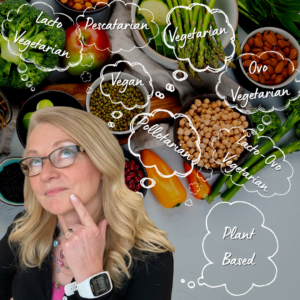
First, What Do We Mean by “Plant-Based”?
A plant-based diet does not necessarily mean vegan.
In the research world, it typically refers to a diet that emphasizes:
- Vegetables
- Fruits
- Whole grains
- Legumes (beans, lentils)
- Nuts and seeds
It may include small amounts of animal protein — but plants are the foundation.
And this distinction matters.
Major Clinical Trials in Breast Cancer Survivors
1. The Women’s Healthy Eating and Living (WHEL) Study
Published in JAMA (Pierce et al., 2007), this large randomized trial followed over 3,000 women previously treated for early-stage breast cancer.
Participants increased:
- Vegetable intake
- Fruit intake
- Fiber
- Reduced dietary fat
What they found:
Overall recurrence reduction was not statistically significant across all participants.
However, subgroups of women (particularly those without hot flashes, potentially indicating higher estrogen levels) showed improved outcomes.
Translation? Diet alone isn’t a cure — but it may influence hormone-related pathways.
2. The Women’s Intervention Nutrition Study (WINS)
Published in the Journal of the National Cancer Institute (Chlebowski et al., 2006).
This study focused on lowering dietary fat intake after early-stage breast cancer treatment.
Results:
- Approximately 24% reduction in breast cancer recurrence in the reduced-fat group
- Strongest benefit seen in estrogen receptor–negative tumors
While not strictly vegan, lowering fat intake naturally increased plant food consumption.
This is important.
Large Population Studies Support Fiber & Plant Emphasis
The Nurses’ Health Study (Harvard)
Data published in BMJ (Farvid et al., 2016) found that higher fiber intake was associated with significantly reduced breast cancer mortality.
Women with the highest fiber intake had better survival outcomes.
Fiber is found exclusively in plant foods.
What Do Cancer Organizations Recommend?
American Institute for Cancer Research (AICR)
The American Institute for Cancer Research recommends:
“Base your diet on whole grains, vegetables, fruit and beans.”
Their Continuous Update Project consistently finds that:
- Higher fiber intake improves survival
- Maintaining a healthy body weight reduces recurrence risk
- Diet patterns rich in plant foods are protective
World Cancer Research Fund (WCRF)
The World Cancer Research Fund echoes similar findings:
- Diets emphasizing plant foods are associated with improved survival
- Excess body fat increases recurrence risk
- Fiber intake is protective
Notice the pattern?
It’s not about perfection.
It’s about pattern.
What About Soy? Is It Safe?
This is one of the most common fears among survivors.
Multiple meta-analyses (Zhang et al., 2012; Shu et al., 2009) have found:
- Moderate soy intake is safe for breast cancer survivors
- It may even be associated with reduced recurrence risk
Whole soy foods (tofu, edamame, tempeh) are not the same as processed soy isolates.
And the data is reassuring.
What the Evidence Actually Supports
Here’s the balanced, responsible takeaway:
Research supports:
✔ Diets high in vegetables, fruits, whole grains, and legumes
✔ Higher fiber intake
✔ Maintaining a healthy body weight
✔ Lower saturated fat intake
✔ Reduced overall inflammation
Research does NOT support:
✖ A single “miracle” food
✖ Extreme restriction
✖ The idea that food alone determines recurrence
Diet is one piece of the survivorship puzzle.
Movement, stress management, sleep, body composition, and medical follow-up all matter.
So Should You Go Fully Plant-Based?
The research does not require 100% vegan eating to see benefits.
What it consistently supports is a plant-forward pattern.
For many women, that looks like:
- Filling half your plate with vegetables
- Increasing fiber gradually
- Reducing processed foods
- Shifting animal protein from “center of the plate” to “supporting role”
Small shifts.
Big long-term impact.
A Gentle Invitation
If you’re curious whether a more plant-focused approach could support your long-term health — without extreme dieting — I created a simple guide to help you explore it safely and practically.
You don’t need perfection.
You need clarity.
Text me at 315-887-3440 and I will send you the details!
References
Pierce JP et al. (2007). Influence of a diet very high in vegetables, fruit, and fiber and low in fat on prognosis following treatment for breast cancer. JAMA, 298(3):289–298.
Chlebowski RT et al. (2006). Dietary fat reduction and breast cancer outcome: Interim efficacy results from the Women’s Intervention Nutrition Study. Journal of the National Cancer Institute, 98(24):1767–1776.
Farvid MS et al. (2016). Dietary fiber intake in young adults and breast cancer risk. BMJ, 354:i3671.
Zhang YF et al. (2012). Soy food intake and breast cancer survival: A meta-analysis. Breast Cancer Research and Treatment, 134(3): 795–803.
Shu XO et al. (2009). Soy food intake and breast cancer survival. JAMA, 302(22):2437–2443.
American Institute for Cancer Research. Continuous Update Project Reports. www.aicr.org
World Cancer Research Fund. Diet, Nutrition, Physical Activity and Breast Cancer Survivors. www.wcrf.org